Thursday, June 15, 2000

Washington Times - White House protester undaunted for nearly 20 years

White House protester undaunted
for nearly 20 years

Washington Times, Thursday, June 15, 2000, Tom Knott

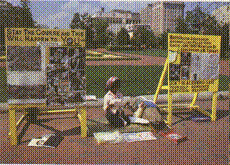
Concepcion Picciotto lives in protest across from the White House, inhabiting a slab of sidewalk by Lafayette Park.
She has not been there forever it only seems that way.

Mrs. Picciotto, a native of Vigo,Spain, is nearing her 20th year along this closed-off portion of Pennsylvania Avenue. Her message, directed to the principal occupant of the White House, is simple: Stop the nuclear madness.

Bill Clinton does not respond, not unlike those before him, and so, Mrs. Picciotto, one voice one remarkably persistent voice is bound to this part of the city, ever committed to the cause. She is unbowed.
"What makes me tired is the same people who can't come to heir senses ' she says on this sunny, pleasant afternoon.

Mrs. Picciotto, 55, came to the United States in 1964 to work as a secretary with the Spanish Consulate in New York City. She lived her version of the American Dream in those years. She had a job and eventually a husband, a daughter and a home. But the marriage went sour, and a protracted divorce and custody fight ensued.

By 1980, Mrs. Picciotto was working and living in Washington, pleading her legal case on Capitol Hill and then finally on the most well-known artery in the city.

It wasn't long, as she came to know other protesters at the White House, that she adopted the anti-nuclear effort. She says she became an unofficial part of the landscape in front of the White House on Jan. 1,1981.

Her only move, from the White House side of Pennsylvania Avenue to the Lafayette Park side, was prompted by the National Park Service in 1983.

So now, 17 years later, she sits in the same spot, reading, painting and handing out fliers to passers-by while championing a cause. Squirrels and pigeons keep Mrs. Picciotto company. They stay at her side in exchange for the occasional peanut.

"What is the future of our children?" Mrs. Picciotto says. "People have to come to their senses, to think twice before engaging in confrontations."

Mrs. Picciotto is amiable, well spoken, easy on those who attempt to make conversation with her. A tourist suggests it would be nice to have a snapshot taken with her. Would she mind? Why, no. Of course not. She smiles for the camera.

Mrs. Picciotto says the winter months can be particularly hard. On some nights, the cold, no matter how many layers of clothing, cuts to her bones. And still she stays, looking to be heard, refusing to go away.

"Bill Clinton is too busy with Monica to pay attention to what I'm doing," she says.

No one seems put off by Mrs. Picciotto's makeshift camp, notably the U.S. Park Police officers milling around their cruisers parked on Pennsylvania Avenue. Her two plywood signs pass the legal requirements.

Even free speech has its limits across from the White House, the limits being no more than two signs per person and no sign taller than 6 feet.

Shouting is permitted, as one middle-aged man makes clear along Pennsylvania Avenue before he turns right onto East Executive Park. He is wearing a white T-shirt with the words "Salvation for Satan" emblazoned on it. He is shouting his thanks to the uniformed representatives of the U.S. government for granting him free speech.

At least one, a park police officer, smiles and says, "You're welcome."

For Mrs. Picciotto, free speech is a lifestyle.

"We have to do this," she says, referring to herself and cohort William Thomas. "The situation is getting worse by the day. We need education, jobs and housing for the poor."

They maintain a post office box and an Internet site (http://www.prop1.org/conchita).

As perhaps the city's truest believer, Mrs. Picciotto braves the elements, the gawkers, the loss of privacy and God only knows what else on this stretch of pavement.

At night, when the avenue is empty and dark and the park fills with characters of questionable repute, does she ever question her devotion to the cause?

"No, she says simply .
Is she ever scared?

"There is the threat right there," she says, pointing to the White House. "There is the danger."

Thursday, July 29, 1999

BILL CLINTON NACHBARIN

Nachrichten Donnerstag,
29, Juli l999

BILL CLINTON NACHBARIN


Friedens- Aktivistin aus Spanien Kampiert seit l8 Jahren vor dem Wem WeiBen Haus
Zwischen Anti-Kregs-Parolen und Kisten Mit berrralten Steinen aitz Concepcion Picciotto vor dem WelBen Haus
Foto-dpa
Tz Washington
Sie ist die nachste Nachbarin von Amerikas Prasidenten, und das schon seit 18 Jahren. Doch wahrend Bill Clinton wie seine Vorganger Bush, Reagan und Carter im Wei Ben Housresi ,ist das Heim von Concepcion Picciotto nur ein oaar Quadrtmeterr groB, hat weder Dach och Bett oder Stuhl.
Im August l98l zog Concepcion Picciotto, kurz Connie, vor das WeiBe Hous. Seittdem lebt sie heir auf der StraBe und demonstriert fur Frieden und Gerechtigkeit auf Spanierin kampiert zwischen zwei
Holzchildern, auf denen aie ihre Friedenbotschaften geschrieben hat. Meisten sitzt sie auf einer Kiste, umgeben von Kartons, in denen sie bemalte Steine aufbewahrt. Die verkauft sie, weil sie sons kein Geld Fur Essen hatte..

Zunachst hatte sie direkt vor dem Zaun des sie direckt vor dem Zaun des WeiBen Houses gewohnt. Dann wurde sie auf die andere StraBenseite verbannt-auf Veranlassung der demaligen First Lady Nancy Reagan, wie Connie glaubt.
Von ihren Nachbarn halt sie nicht viel,., Carter, Reagan, Bush oder Clinton, sie sind alle gleich, sie unterstutzen den Krieg.

Monday, December 1, 1997

DEAD LITTLE GIRL OF HIROSHIMA

DEAD LITTLE GIRL OF HIROSHIMA

I came and stand at every door but none can hear my silent tread I knock, but remain unseen for I am dead, for I am dead.
I'm only seven, though I died In Hiroshima long ago I'm seven now as I was then When children die They do not grow old.
I need no fruit, I need no rice I need no food, not even bread I ask for nothing for myself for I am dead, for I am dead.
All that I ask is for peace. You fight today. You fight today So that the children of the world May live and grow and laugh and play.

Standing at Ground Zero - Fumiko Amano

From:
White House Anti-nuclear Peace Vigil
24 Hours a day Since 1981
Maintained By Two Individuals
C. Picciotto and W. Thomas
P.O. Box 4931
Washington, D.C. 20008


Concepcion Information List | Conchita Personal Story
Photographs | The President's Neighbor

Saturday, February 1, 1997

Received from Shinichi Miyake, Hokkaido, Japan, 2/11/97


NEWSLETTER "YA- USU-BETSU"
NO. 1 February 1, 1997

Received from Shinichi Miyake, Hokkaido, Japan, 2/11/97: Thank You, Ms. Picciotto!
510 Signatures arrived here in Kushiro


This passage is an excerpt from my letter for Ms. Picciotto. She is an activist of the anti-nuclear Peace Vigil which has continued since 1981 in Lafayette Park outside the White House.
"I am happy to learn that you are getting along quite well. A few days ago, I received a letter from Ms. Michie Mori who is Japanese student studying at American University in Washington, D.C. Michie said, when she recently visited the fort of Peace Vigil you asked her to send the petitions to me. In the big envelope, a lot of signature sheets were enclosed. The number was 477 people on 28 sheets. Total reached 510 in all, including 33 that you gave me three months ago at your fort. I am grateful to you for your cooperation."
To say in detail, the signer's nationality cover over 32 countries as follows:
America/137, Canada/6, Mexico/1, Panama/1, Columbia/3, Brazil/8, Uruguay/1, Argentina/4, UK/17, Ireland/7, Sweden/2, Netherlands/6, Belgium/1, Germany/27, France/4, Switzerland/2, Austria/1, Italy/6, Spain/34,Czeck/1, Slovakia/8, Hungary/1, Russia/4, Turkey/3, Israel/2, Singapore/1, Australia/8, New Zealand/5, South Africa/2, South Korea/95, China/6, Japan/93, and not clear/19.


Friday, November 1, 1996

La gallega apostada ante la Casa Blanca lleva 16 anos viviendo a la intemperie

Concepcion Martin inicio la campana de protesta al ser dela custodia de su hija

La gallega apostada ante la Casa Blanca lleva 16 anos viviendo a la intemperie

El proximo martes, cuando las elecciones norteamericanas confirmen la anunciada victoria de Bill Clinton para un segundo mandato presidencial, ep flamante presidente democrata ocupara de nuevo su despach o
WASHINGTON. R. GARCIA-RICO


Concepcion Martin sigue en su sitio, exactamente igual que el primer dia del mandato de Clinton, como lo ha hecho durante los dos de Reagan y el de Bush, denunciando con su persistente presencia .
La atormentada historia de esta mujer espa�ola, nacionaii- zada americana, comenzo al intentar Ilevarse a su Galicia natal a su hija de pocos meses tras el divorcio de su marido estadounidense.
Perdio la batalla legal en los tribunales y con ella la potestad de la niRa (a la que no ha vuelto a ver), su trabajo (era int�rprete de la ONU y de la Oficina Comercial Espanola en Nueva York), y su hogar que sustituyo como una homeless mas por el estrecho espacio de tres metros cuadrados de acera frente a la Casa Blanca, en los que no puede tener una silla, tumbarse o dormir sbiertamente por imposicion de ordenanzas municipales estabIecidas precisamente para frenar su causa.
Connie como es conocida ella aqui, a pesar de ir ataviada con sus viejas ropas y Ilevar permanentemente un casco para protegerse de posibles agresiones, tambien navega en Internet, hasta donde ha hecho Ilegar su historia y su protesta. Se lo debe a Thomas, un hippie cincuenton que en los 60 se entretenia reflexioando solo por el desierto y del que recibe la racion diaria mas importante de solidaridad.
Y luego sigue explicando los males que aquejan a nuestro mundo:
"Vote por Perot en las ultimas elecciones, pero esta vez me absendre porque nadie puede arreglar esto. Quiza los negros, que son los que tienen mas fuerza".

Connie vive de donativos y del dinero que gana vendiendo unas piedras pintadas que hoy dia se encuentran repartidas por todo el mundo. Se alimenta practicamente solo de conservas, pan y galletas
Sueno con volver a Galacia; me iria ahora mismo, afirma con la clasica morrina de los gallegos repartidos por todo el mundo, sentencia, para asegurar que seguira� con la misma tenacidad eI tiempo que haga falta. Y luego, en voz baja, susurra, ademas, aqui estoy mas cerca de mi hija,
A veces me pregunto si todo esto es una pesadilla o una realidad, dice ajustandose el flequillo que asoma por el casco,"pero todos las problemas provienen de los negocios, del los grupos judios. yhasta que no acebemos con ello,dodevoy a estar mejor" , comenta Connie.
La gente simpatiza conmigo, anade, mientras saluda familiarmente a un guia que acompa a un grupo de turistas coreanos. "Dios me da fuerza para continuar, asegura la mendiga, que soporta temperauras e xtremas enverano y en invierno, como las del pasado ano, que se situaron por debajo de los 10 grados bajo cero. Pronto recibira al nuevo presidente - son todos iguales, no hacen mas que insultarse - y con seturidad proseguira� su vigilia permanente guardando, ademas, su unica propiedad real: una sortija y unos pendientes de su hija, a la que no ve desde hace 16 anos.

Friday, December 1, 1995

The Little Giant


WHITE HOUSE PEACE VIGIL
SINCE 1981


CONCEPCION
PICCIOTTO


The Little Giant


A model of focus and dedication, Concepcion has maintained what may be the longest continuous vigil in history. Her consistancy is legendary and tourists come to Lafayette Park from around the world anxious to meet her. :

Concepcion, standing up for her rights.


"Welcome to the M.A.D. House"
a photo of a sign on her sign
makes tourists laugh.


Tourists from Korea, Japan, Guatemala, France, Peru, Germany, South Africa, Mexico, Spain, & more... flock to see a monument to life, alive: twice in the Berlitz Guide... rumors now she's in the Guiness Book of World Records...


Concepcion Information List | Conchita Personal Story
Photographs | The President's Neighbor

Friday, September 1, 1995

Concepcion-der Stachel in der Seite des Weiben Hauses


Concepcion-der Stachel in der Seite des Weiben Hauses

Uber eine merk-wurdige Frau and Nachbarin des USA-Prasiden / Aus Washington berichtet
REINER OSCHMANN
Neues Deutschland
Freitag, 1, September 1995


Das Weise Haus ist eine ers Adresse nicht nur fur Politikaus aller Welt. Es ist Magnt fiir t~glich Tausende Touristen. Zuvorderst aber ist f Amtssitz und Wohnung des elsten Mannes der Vereinigte Staaten. Jeder Prisident auSf George Washington, der 179 den Grundstein legte-und, wj es heiBt, den Bau iibeiwachtc hat hier gearbeitet und mit se: ner Familie gewohnt.
Seit dem 1. AuRust 1983 Irunmehr im 15. Jahr, hat da WeiDe Haus eine ungewiihnl che Nachbarin. Sie lebt gena gegeniiber dem Nordfliigel de Preisidentensitzes unter freier Himmel und ist nur durch di Breite der Gehsteige und de Pennsylvania Avenue von de Prlsidentenfamilie getrenn Bei ihrer Ankunft waren es di Reagans, spiter die Bushr heute sind es Bill und Hillar Clinton.

Busfahrt ohne Riickfakarte

Auf dem BiiFgersteig bean sprucht die Frau nicht meh als drei bis vier Quadratmeter Dort hat sie ihre selbstgeba stelten Transparente und Poster errichtet. Hier ist ihr Fahr rad abgestellt, ihr Zeichenzeu: und das biBchen persiinlichl Habe. ijber drei Plastik-Milch kisten hat sie eine sauberl Wolldecke gespannt - ihr Sofa Stuhl und Bett in einem, unc auch vgn hier aus hat sie Garten, Springbrunnen und;dil Fensterfront auf der Nordseit des White House im Blick Nachts um elf schalten sie dic Beleuchtung des Brunnen ab", sagt ConcepciBn Picciottc und gibt damit Intimkenntnil der Nachbarschaftsverh;iltnisse zu erkennen.
Die 50jahrige stammt aus Galizien im Nordwesten Spaniens und ist seit gut 30 Jahren den USA. Neun Jahre verbringt sie zunachst in New York in der Handelsvertretung der spanischen Botschaft, dann fur ihr Land bei der UNO. Die kleine Frau spricht funf Sprachen, deutsch nur wenig Worte. Die ersten Jahre in New York lebt sie an der Seite ihres italienischen Ehemannes standesgemaB: Eine Grande Damder Gesellschaft - der Ehepartner Geschaftsmann und Vater der gemeinsamen Tochter Olga ("nach der russischen Turnerin Olga Korbut, die ich bewunderte"), die 1973 geboren wird.
Als Concepcion 20 Monate spater eine traumatisch Scheidung erfahrt, nach der der autoritare Vater auch die Vormundschaft fur die Tochter erhalt, verandert sich fur die Mutter alles: Concepcion verliert Ehemann und Tochter, Arbeit und Zuhause. Jahrelang versucht sie die Vormundschaft fur das Kind zuruckzu gewinnen. Sie geht im Bundesstaat New York und in Madrid vor Gericht. SchlieBlich sucht sie, den fur New York zustandigen Abgeordneten im Unterhaus des Bundesparlaments in Washington fur ihren Fall zu interessieren. Alles vergebens.
Concepcion tragt daraufhin den Kampf um ihr Recht in die Offentlichkeit, zumal sie merkt wie oft die Prinzipien des Rechtsstaats nicht mit seiner Praxis ubereinstimmen. Eines Tages, im Sommer 1981. packt sie ihre Sachen, nimmt einen Bus zum Lafayette Park und laBt sich vor dem WeiBen Haus nieder. Seitdem ist sie dort geblieben. Tag und Nacht, Fruhling, Sommer, Herbst und Winter, und seit langem ist der Kampf um ihr personliches Recht aufgrund ihrer Politisie-rung zu einem Kampf um Frieden und internationale Gerechtigkeit geworden.
Heuchelei und Doppelzun-gigkeit der Herrschenden, die sie zunachst personlich, dann als offen politisch Handelnde erlebt, nennt Concepcion als Motiv ihres aufsehenerregen- den und in jeder Hinsicht stra-paziosen Protests.."They're lying" - sie lugen, steht auf dem Anstecker an ihrer Brust, und auch die Flugblatter,,.die die schwarzhaarige Frau an die Passanten verteilt, machen vor allem auf den Widerspruch zwischen den wohltonenden! Friedensbeteuerungen aus dem WeiBen Haus und dem Festhalten an der Atomwaffenpolitik aufmerksam. Sie zeigt mir das Lincoln-Zitat auf ihrer Wandzeitung, um die Offentlichkeit des Protests zu erklaren: To sin by siience when they should protest, makes cowards of men - durch Schweigen sundigen, wo protestiert werden mubte, macht aus Mannern Feiglinge...
Feige ist das Personchen gewib nicht, was immer man von ihr halten mag. Wiederholt ist sie in den vergangenen Jahren von der Polizei eingeschuchtert und bedrangt, nachts uon betrunkenen Obdachlosen im Lafayette Park angegriffen worden. Die Behorden verschlrfel wiederholt ihre Vorschriften um die stolze Spanierin zun Aufgeben zu zwingen. Ers nmuB sie vom Gehsteig vor den kZaun am WeiBen Haus auf del Gehsteig der gegenuberliegen den Strabenseite wechseln Dann wird die Zahlder Transparente auf zwei, ihre maxi male Hofe auf 1.80 Meter be schrankt, Spater festgelect,dab sie ihre Friedenswache nich weiter als drei FuB (knapp einen Meter) verlassen darf. Einc Verletzung dieser vorschrif galte als Im-Stich-Lassen det Protestposter und wurde die Polizei zur Beschlagnahme des Standes berechtigen.
Auch schlafen darf Concepcion des Nachts offiziell nicht weil dies - rechtlich betrachtet unberechtigtem Camping im Park gleichkame. "Man raubt mir Stuck fur Stuck einzelne Freiheiten". Sie sieht darin einen Beleg fur ihr Urteil uber die USA: The land of the free - as long as you agree. Auf deutsch etwa: Das Lana der Freien, vorausgesetzt, Du sagst zu allem Ja und Amen. Das aues schafft Fia Concepcion ganz praktische Schwie- 1 rigkeiten: Sie kann sich kaum vom Fleck bewegen. Wenn sie einmal pro Tag in einem Obdachlosenasyl auf der anderen Seite des Lilfayette Parks du- schen,!zur Toilette und etwas einkaufen geht, kann sie da's nur tun, wenn vorher Bekannte die Aufsicht uber die Mahnwache ubernehmen.
Kopfhelm unter der Perucke Spatabends lehnt sie sich, im; Sitzen, mit dem Kopf an den Holzrahmen ihres Plakatgestells und schlaft so, "pro Nacht vielleicht vier bis funf Stunden. Am schlimmsten sind die Winter, der vor zwei Jahren steckt ihr noch heute in den Gliedern. "Die StraBen waren spiegelglatt vom Eis. Hier auf der Pennsylvania Avenue haben sich die Autos wie Karussells gedreht, und Bekannte wolltenmich wegholen von der Friedenswache. Ich bin Nacht fur Nacht auf und abgegangen und habe gebetet, Gott moge mich nicht erfrieren lassen."
Sie bestreitet, verbiestert zu sein."Ich bin nicht der Typ, der sich in die Ecke setzt und heult. Icb hin ein lustiger Mensch, und friiher habe ich viel gesungen. Ich bin eine Kampferin". Concepcion zeigt auf ihren Kopf, auf dem sie unter Kopftuch und Perucke einen Helm tragt. Immer. Aus Erfahrung, nachdem sie vor einigen Jahren ein amerikani-scher Marinesoldat ins Gesicht geschlagen hat. Fast verschmitzt bedeutet sie mir: "Im Laufe der 15 Jahre kann ich schon Fortschritte beobachten. Anfangs haben mich viele Amerikaner beschimpft: "Go to Russia!', 'Beschaff Dir nen Job'! oder einfach nur: 'Verschwinde!' Inzwischen finde ich viel Aufmerksamkeit und Zuhorer.
Concepcion versteht sich nicht als Aubenseiterin. "Ich bin keine Exzentrikerin, son-dern durch meinen Kontakt mit so vielen Menschen eng mit dem Alltag verbunden. Die da druben", erklirt sie mit einer Armbewegung in Richtung ihrer prominenten Nachbarn, "die leben in einer Welt der Phantasie, ich aber bin Zeuge ihrer Verbrechen."
Ihren Lebensunterhalt be-streitet sie mit bescheidensten Mitteln. Von kleinen Spenden, die sie bisweilen fur ihre Flug- blatter und fur die in leuch-tender Farbe und mit Friedens- symbolen bemalten Steine bekommt, ernahrt sie sich. Ein Backer aus der Umgebung bringt ihr manchmal eine Tute mit Brotkrumen. Sie brauche nicht viel, rauche und trinke nicht. Sie wundert sich selbst, dab sie das alles bis heute gesundheitlich unbeschadet uberstanden hat. "Das einzige Krankheitsgefuhl, das ich verspure, ruhrt von dem her, was die dort tun. Eigentlich mochte nicht mehr hier sein, aber ich weib nicht, wie lange ich bleiben werde".
Den heutigen Amtsinhaber im Weiben Haus halt sie irgendwo fur ehrlicher als seine beiden Vorganger. Nicht nur, weil Amerikas First Lady ihr einige Male ein paar Sandwiches vorbeibringen lieb. Doch trauen tut sie keinem amerikanischen Prasidenten. Auch die vor unserem Gesprach gerade bekanntgewordene Ankundigung Clintons, Amerikas Kernwaffenversuche ab sofort generell einzustellen; nimmt sie voller Argwohn auf. "Clinton ist ein Wetterhahn. Heute so, morgen so". Man musse auf der Hut und, was sie betrifft, vor Ort bleiben.
Unsere Unterhaltung wird mehrfach unterbrochen. Sobald Passanten Interesse fur ihre Friedenslosungen zeigen, spricht Concepcion sie an, for dert sie auf, sich gegen internationale Waffenverkaufe, fur das Verbot von Atomwaffen-versuchen oder gegen die all-gemeine Doppelzungigkeit des modernen Lebens einzusetzen. Kleiner hat sie's zlicht, kleiner will sie's nicht, deswegen hat sie auch keine Scheu - mit einem Blick uber den Zaun des Weiben Hauses - zwischendurch Satze wie diesen fallen zulassen: "Es gibt keine Grechtigkei oder Demokratie in dem, was Amerika vorlebt. It is all propaganda and double standards."
In den Augen manches Amerikaners gilt sie als Kommunistin, mindestens als vater landslose Gesellin. Das ficht Concepcion Picciotto nicht an. "Ich glaube an Gott, aber nicht an die Kirche oder religiose Organisationen, weil sie alle korrupt sind. Ich bin weder Sozialistin noch Kommunistin, und ich kassiere keine Wohlfahrt. Ich bin einfach nur ein Mensch, der Frieden, Freiheit und Gerechtigkeit liebt."

Wenn's nach den Geheimen ginge...

Solche Bekenntnisse reichen aus, Ordnungshuter zu verunsichern. J.F. Muskett, ein drahtiger junger Mann im kurzarmligen Uniformhemd und mit mustgrgultig gestutztem Oberlippenbartchen, ist einer der Geheimdienstmanner, die ebeniso dskret wie unubersehbar den Komplex des Wieben Hauses umstehen. "Er habe, sagt er zu mir, uberhaupt nichts gegen Concepcion, die bekannteste Nachbarin des Prasidenten. "Sie ist eine friedfertige und anstandige Frau. Ich wurde sie auch nicht wegschleppen. Aber wenn es nach mir ginge, wurde ich sie wegbegleiten, denn mit ihrem Dauerprotest verschandelt sie das Weibe Haus, das zu sehen, viele Menschen extra von weither anreisen.
Wie es aussieht, ist Concepcion, die kleine Amerikanerin aus Galizien, ein kleiner, unangenehmer Stachel in der Seit des Weiben Hauses. Sie weib, dab am 1. September Weltfriedenstag ist. Aber das ist ihr nicht weiter bedeutend. Fur sie ist jeder Tag Weltfriedenstag. Seit knapp 15 Jahren.

Thursday, June 1, 1995

NOVA SAO PAULO


NOVA SAO PAULO


Vigilia pela Paz


Ha 14 anos, Concepcion Martin Picciotto, de 50 anos, vive 24 horas por dia, em vigilia pacifista anti-nuclear, em frente a Casa Branca, em Washington-Estados Unidos. Desde este tempo, ela passa o dia pregando a paz entre os paises. Concepcion conta que durante os 14 anos de sua vigilia, ela ja esteve na calcada que beira a Casa Branca e depois foi impedia, passando a ficar do outro lado, na praca localizada a avenida Pennsylvania. Sobrevive de ajuda de particulares e de donativos que recebe quando vende algum material que ela mesmo pinta sobre a paz. Reconhece ser uma campanha muito sofrida porem ela disse que gosta muito de ficar la 24 horas por dia, e nao importa o sacrificio vai continuar ate quando Deus Quiser.
Os turistas e curiosos que frequentemente passam para conhecer a Casa Branca recebem uma palavra de optimismo em favor da paz, proferida por Concepcion. Ela acha que se todas fizessem a sua parte haveria menor dor e sofrimento no mundo. Os grupos religiosos, direitos, humanos, outras organizacoes e povo em geral devem sempre se preocuparem com a paz no mundo indidtintamente e proibirem as experiencias nucleares que sao os poerigos da humanidade, conclui a pacifista.


Thursday, December 22, 1994

Washington Post - Two Worlds Collide Near White House

The Washington Post, Thursday, December 22, 1994

Two Worlds Collide Near White House

Shooting Puts Focus On Pennsylvania Divide

By DeNeen L. Brown and Wendy Melillo
Washington Post Staff Writers


Usually the two worlds are parallel in the 1600 block of Pennsylvania Avenue: the White House on one side, representing power and some sanity, and Lafayette Square on the other, filled with the powerless, homeless and demonstrators, some who slip in and out of lucidity as they mount angry protests.
On Tuesday, the two sides collided when a homeless man dashed across the avenue and allegedly attacked a U.S. Park Police officer, whose job it is to secure the grounds around the White House.
The man, identified as Marcelino Corniel, 33, who was shot twice--in the chest and leg--had lived in the park for several mouths. He died yesterday at George Washington University Hospital.
Yesterday, a number of demonstrators and homeless people who stay in the park said they believed Corniel had "snapped" because he was angry about what they called police harassment. They said Corniel was upset that Park Police had taken away two lockers belonging to some of his homeless friends. One man said that Corniel wanted revenge because officers had taken away his blankets.
The shooting on the sidewalk in front of the White House has brought new attention to the world of Lafayette Square, a green square once called Presidents Park that has become a grand stage for world protests and a symbol of the American right to freedom of speech.
Yesterday, Frank Fahrenkopf, the former national chairman of the Republican Party, called for officials to clear out the park. "The American people should have the right to bring their kids to see the people's house without having bums abuse them or yell or scream or see people lying in their own filth," Fahrenkopf said.
The park, which was once the front lawn of the White House, has become a neighborhood--the homeless and demonstrators live on park benches instead of in houses. The anti-government- demonstrators have claimed the sidewalk along Pennsylvania Avenue as their territory. Homeless people congregate not far away in the northeast and northwest comers of the park. During the day, they wait on benches, talking Some drink from paper bags and others just sit and stare. Mostly, they wait for food, for sandwich wagons, gracious souls who bring fruit and office workers who deliver leftovers from office parties.
At night, they fend off rats and sit straight up as they "nap" to avoid citations for sleeping-prohibited in the park. As in any neighborhood, there is neighborly tension. "Basically, they have it good on the front line, said a homeless woman named Robin, who moved to the park six months ago, who sits on a cushion on a bench near 15th and H streets NW. "They get stuff on the front line all the time, and they don't tell us about it. We don't get along. They just act snobbish."
Concepcion Picciotto, a woman who has kept a vigil directly across the street from the White House since 1978 to protest nuclear weapons, said she is not part of the group of homeless people. I'm not connected with that," she said dipping a brush in a can of green paint as she drew a peace sign and a dove on a stone. I'm here, to communicate my cause and paint my rocks.
Not far from her live the "Jackson brothers," who are protesting the "assassination" of their father, who they say was a presidential adviser. They also claim to be direct descendants of at least five presidents. They complain about police. "They take a stick and come by in the morning and bang on the boards and scream,'Get up,' "Walter Jackson said.
U.S. Park Police patrol day and night to enforce federal laws that prohibit people from camping in the park. Park Police Maj. Robert H. Hines said security has been increased since Oct. 29, when more than a dozen shots were fired at the White House, allegedly by a Colorado man. He said two officers instead of one are now assigned to patrol the two beats, the sidewalk in front of the White House and the park. Hines denied that officers are harassing people in the park.
He said officers are just trying to enforce the law against camping, "I think each officer allows a little latitude. If someone falls asleep, they might let them sleep for an hour or two," he said. "But if they have been Sleeping all night long, we wake them up. We don't want to get the appearance the park is a camp site."

Sunday, June 19, 1994

14 JAHRE FUR DEN FRIEDEN

TAG UND NACHT VORM WEIBEN HOUS;
14 JAHRE FUR DEN FRIEDEN
Von unserem Korrespondenten Peter W, Sschroeder
BREMER
Sonntag, 19, Juni 1994
NACHRICHTEN
Washington, Amerikaniche Peasidenten Kommen und gehen,, aber sie bleibt; Concepcion Picciotto Vor l4 Jahren zog die geburtige Spanieren mit Friedensplakaten vor das WeiBe Haus und und blieb. Sie hat ihren Plaatz seit uber 5000 Tagen und Nachten nicht mehrr verlassen, Wenn die da ver nunftig werden" sagt die 49jahrige Frau und zeigt auf den gegenuberliegenden Amtssitz des Prasidenten, dann kann ich in die Gesellscraft zuruckkehren :Abersieist beinahe sicher, auf dem Pflaster vor dem WeiBen Hous zu sterben.
Etlichen Amerikanern war und ist Concepcion ein Dorn im Auge,, Fur die ehemalige First Lady Nancy Reagan war die Dauerdemostrantin mit ihren beleiddigenden Transparenten: ein :Schandfleck: Der damalige Innenminister betrachtete die Friedenskampferin als Sicherheitsriisiko und verbot jegliche Demostration auf demm Gehweg vor der Schlaf und Arbeitsstatte des Prasidenten Daraufhin siedelte Concepcion zur enderen StraBenseite uber, an den Rand des Lafayette-Parks. Dort wird sie haufig von patriotischen Amerikanern angepobelt.
Wahrend des Golfkrieges wurde sie von einem Marines zusammengeschlgen, Ein in der Nahe stehender Polizist drehte sich um sah weg. Auch die Administration bemuht sich seit Jahren mit UNO-Angestellte Concepcion zu vertreiben, Beispielsweise dart sich niemand in der Nahe des WeiBen Houses Schlafen legen, Wenn ein Demosntrant sich weiter als einen Meter von seinen Besitztumern- ein-schlieBlich der Protesttschilder- entfernt…..
, durten sie von den sprungbereiten Polizisten beschlagnahmt werden.
Mit dem Einzug von Bill Clinton sind die Belastigungen seltener geworden" sagt die Dauerdemonstrantin, Hillary Clinton-Fan ist Concepcion deshalb noch lange nicht geworden. Der ist elwas besser als die anderen, aber fur den Frieden tut er nich genug Auch unter Clinton gilt weiterhin das Schlafverbot vor dem WeiBen Haus, Inzwischen hat sich Concepcion das Schlafwn abgwohnt. Irgendwann in der Nacht hockt sie sich aufeinen kleinen Karton und dost vor sich hin. Mehr als drei Stunden Ruhe Kommen aberr nur in wenigen Nachten Zusammen.
Im Winter, wenn die Quecksilbersaule oft auf mehi als 20 Grad minus fallt, macht sie die Augen immer nur fur ein paar Minuten zu= aus Angst vor dem Erfrieren. Ansonsten furchtet sie nur noch vor dem, Erfrieren, Ansonsten furchtet sie sich nur noch vor dem Alter,

Passanten drucken ihr gelegentlich Dollarscheine in die Hand, DDaavon laBt sie Handzettel mit Friedensbotschften drucken und kaufl blaue und weiBe Farbe, mit der sie Friedenstauben auf Steine malt. Die Stteine verschenkt sie als Mahnung, daB wir Frieden brauchen" Sie sollen auch ihr Vermachtnis sein,, Die Friedenstauben wird es noch geben, wenn ich nicht mehr demonstrieren kann.

Wednesday, June 1, 1994

Protesten als dagtaak


Protesten als dagtaak

jan doets america tours

amerika & canada
revue 1994


ledere dag en ledere nacht. Van's ochtends vroeg tot 's avonds laat. Op een beschelden stukje stoep in Lafayette Park, recht tegenover de ingang van het Witte Huls. Connie Picciotto demonstreert sinds 1 augustus 1981 onafgebroken tegen misstanden in de wereld. Als buurvrouw van al drie presidenten is demonstreren haar dagtaak geworden. Samen met haar vriend William Thomas en deeehoorns in het park. Geen van de buren heeeft ze echter ooit ontmoet. Ze vindt Bill Clinton sympathiek, maar betwijfelt of hij haar zal ultnodigen. Haar boodschap: vrede, vrijheld en grechtigheld in de wereld. Acties als "Live By The Bomb...Die by the Bomb' en "Civilized People do not Nuke Fellow Humans'.
Ze zijn mede-oprichters van het White House Anti-Nuclear Peace Vigil. Ze claimt het moderne record voor het langste presidentiele proptest. Deelt pamfletten uit, praat met voorbijgsangers, stelt haar vriend zijn protestborden ten toon. De boodschap is simpel: vrede, vrijheid en gerechtigheid. Neit zo simpel. Dat blijkt uit de reacties. Connie en haar vriend zijn bedreigd en gearressteerd door de politie, geslagen en uitgedaagd door vreemden, genegeerd door de meerheid van hun publiek.
"We offeren veel," zegtt Connie Picciotto, die 43 jaar is. "Maar we houden het vol, want het is het waard."
Een bijzonder leven van een vrouw die geboren is in het westen van Spanje. Ze was al vroeg weeskind. Connie Picciotto werd opgevoed door haar grootmoeder. Toen deze overleed besloot zij naar de VerenigdeStaten te emigreen. Ze was toen 18 jaar oud. Op 21-jarigeleeftijd ontmoette ze een Italiaanse zakenman met wie ze later trouwde. Ze vond een baan als secretaresse op het Spaanse Consulaat. In 1980 ging ze werken als babysitter. In haar vrije tijd begon ze zich op te houden voor het Witte Huis met haar handgeschreven protestborden. Haar roep om gerechtigheid. Ze schreef ook brieven. Op een brief aan Lilian Carter kreeg ze de volgende reactie, "Ik sympathiseer met je zaak, maar ik ben duizend kilometer weg en heb geen macht."
Bevriend
Gaandeweg raakte ze bevriend met andere demonstranten. Ze breidde haar acties uit met protesten tegen de nucleaire bewapening. Ze raakte steeds meer doordrongen van haar doel. Uiteindelijk, op een warme dag halverwege Ronald Reagan's eerste presidentsjaar, pakte ze haar bezittingen en nam de bus near Lafayette Park. Sindsdien verbijft ze daar. Ze leeft op koffie, donuts en brood. Af en toe brengen vrienden haar kaas, fruit en sandwiches. Ze gebruikt het toilet van het nabigelen restaurant en neemt af en toe een douche in een opvangcentrum voor daklozen in het centrum. Germiddid slaapt ze drie uur per dag. Leunend tegen een van haar protestborden.
Kou
"De winters zijn het ergst,"zegt mevrouw Picciotto. Er is geen enkele kleding bestand tegen de kou. De meeste nachten 'ijsbeert' ze dan ook over de stoep om zichzelf warm te houden. Ze leeft van donaties. Op een goede dag 'verdient' ze 15 dollar. Ze geeft het geld uit aan voedsel, het drukken van pamfletten en verf voor haar 'peace rocks' waar ze een aantal jaren geleden mee begon. Nu zijn het populaire souveneirs geworden voor de toeristen, hoewel ze weigert om er geld voor te vragen.
Bedregingen zijn haar grootste zorg Het varieeret van verbaal geweld tot lichamelijk letsel. Acht jaar geleden stompte een marinier haar het gezicht. Soms zijn er bedreigingen van enkele daklozen die het park bewonen. De parkpolitie is een verhaal apart. Slapen wordt beschouwd als kamperen - verboden - en het achterlaten van posters is eveneens verboden. Regelmatig moeten ze op de vlucht. Ondanks die tegenslagen blijzij waar ze is. "Ik kan teruggan naaar de samenleving en gewoon mijn geld verdienen. God heeft echter een belangrijkere taak voor mij uitgekozen."
P.S. van Jan Doets: "Wanneer u een bezoek brengt aan Washington D.C., gaat u dan ook eens langs bij mevrouw Picciotto."

Wednesday, April 13, 1994

The Washington Post Friday, May 13, 1994

The Washington Post
Friday, May 13, 1994

History in The Square

By Linda Wheeler
Washington Post Staff Writer


Robert Smith says he's got the best address in Washington. right across the street from the White House.
"I live in Lafayette Park because of the White House over there, the Treasury over there and the Blair House around the corner." said the 4O-year-old homeless man who has dodged police intent on moving him out of the park for six months. What allows me to feel like an impor- tant person."
The location has made the seven-acre federal preserve, once known as the Presidents Park but officially named Lafayette Square in 1834. an international crossroads, the grand stage for protests and for inaugural parades. Nearly every day it is filled by tourists photographing the live-in demonstrators, the homeless panhandling from office workers and bicycle messengers whizzing past chess players and picnickers.
To preserve this contemporary history, the staff of the National Trust for Historic Reservation is recording comments of those who use the great expanse of green lawn dotted with statues of heroes of the early republic and crisscrossed with red and black brick walks.
Michele Craig. director of education for the Decatur House, a national trust property that faces the 204-year-old park. Mid she was inspired to begin the year-long project when her grand- mother recounted childhood memories of Washington and taking tea the nearby Hay-Adams thing that happens every day and everyone experiences it in their own way."
The National Trust is collecting the park's history under a red-and- white stripped tent outside the Decatur House at Jackson Place and H street NW. As people stop by to view historical photographs, they are invited to contribute to the oral history. By yesterday, nearly 300 had stopped by, and Craig said 35 to 40 of them will be contacted for follow-up interviews.
Meridith Smoke, 70, of Washington, told Craig she always brings out-of-town visitors to the park, walking them to all four corners to see the statues and introducing them to the peace demonstrators who have kept a round-the-clock vigil for more than a decade.
One of those demonstrators is Concepcion Picciotto, 47, who has became an unofficial park hostess. Visitors regularly hock around her and listen to her ambling discourse on international issues and corruption at home.
When a group of German visitors came through the park recently, she had fliers to hand out in German. Shortly afterwards, eighth-graders visiting from Montgomery, Vt., photo- graphed her as she displayed the rocks she had painted in primary colors and decorated with white doves. For a donation, 1 visitor can take a peace stone home.
"My work is this work." she told the children. "I take no welfare. I don't take nothing. We have to work for world peace."
Next to Piccioto, an evangelical minister from San Diego had set up a stepladder, climbed up and, holding the Bible aloft, began reciting passages. Picciotto was irritated that he stood so dose to her aged protest signs. He was, she said, taking attention away from her message.
Apostle John C. Zahos. 33, said the Lord directed him to fly to Washington and to preach in Lafayette Square. Next to him, Collin Spruill Spruill. 28, of Washington, played Amazing Grace on a trumpet, saying afterward he hoped President Clinton would bring out his saxophone for a duet. Craig said she plans to go into the park in the next few weeks to interview Smith, Picciotto, Zahos, Spruill and others. During Historic Preservation Week next year, Craig said the statements and photographs of those interviewed will be on exhibit at the Decatur House.
For an the people who view the park as a place to protest or demonstrate. there are many more who see it as a convenient place to play or exercise.
Tom Roberts, 28. an accountant, spends his lunch hour hoping to find a challenging partner for a game of chess. He sets up his board and takes on all competitors. "At lunch time, this is the place to be for chess," he said.
Veteran's Administration employee John Standard. 51. uses the lawn as an exercise mat. The park, he said, is convenient to his office around the corner.
James Sledge. 23, a National Park Service employee for two years. said he would like to talk to Craig but he is too busy mowing the gas twice a week and planting' salvia and dusty miller in flower beds. *This is my park," he said as his red Jacobsen mower rumbled along chopping everything to a uniform two inch height. It is a big spacey piece. with a little group here and littie group there. There is room for everybody."

Sunday, September 19, 1993

A WOMAN'S ROUND THE CLOCK PEACE VIGIL

Daily Express
Malaysia
Sunday, Sept. 19, 1993

A WOMAN'S ROUND THE CLOCK PEACE VIGIL

From James Sarda


PENNSYLVANIA Avenue in Washington D.C. is home to two famous residents both located diagonally across the other.
One is the most powerful man on earth-who exercises great influence from a secure and comfortable white-washed 1818 century mansion.
The other is a woman who braves the wind, rain, sun and snow in a lonely round-the-clock street vigil alerting people to the horrors of weapons and nuclear war.
She also rails against all that her neighbor stands for, decrying what she calls 'inconsistencies of the American government to peoples of other nations.'
A helmet that caps her puny 46-year-old frame is her only protection in life. Although technically homeless. Concepcion Picciotto has won so far in staying power at least.
She has outlasted two of the mansion's occupants - Ronald Reagan and George Bush. "Since sitting here 13 years ago, I have seen leaders the world over enter the 'madhouse' over there." she said pointing to White House across the street.
"I suspect what they discuss most of the time behind those doors is buying weapons." says Picciotto.
She was sitting atop a milk crate on the small sidewalk space which has been her home ever since she decided to demonstrate for a living on Aug 1.1981.
She decided taking her protest to the gates of the White House which draws millions of visitors yearly to be the most effective way of getting her message across.
"People must pressure their governments not to buy weapons anymore.
"There is just too much misery being caused by these.
What people everywhere need is better homes and jobs. Yet governments are engaged in buying weapons to kill people.
Picciotto lacked kind words for both the Republican and Democrat presidents she has ken sharing the neighborhood with.
"There. is no justice or democracy in what America practices. It is all propaganda and double standards.
"Look at the invasion of Panama, Grenada and our involvements in Nicaragua, Kuwait and Somalia.
"Look what happened to (Iraqi President) Saddam Hussein. They labeled him crazy. But he was not crazy when he was working for the U.S.
"Those who challenge US injustices are labeled crazy communist or anti-American. "We also give Israel all those weapons and money and disregard the consequences, enters Lebanon with these like Hitler did in Europe.
"What is the difference and why isn't anyone speaking about paying reparations to the Lebanese and Palestinians' "I am here to make a point. That the US is an evil empire covering up its actions under the veil of democracy," says Picciotto.
As if to make her opinion known to those who do not solicit it, she has a lapel badge that reads "They lie".
Picciotto is knowledgeable and savvy for a woman dedicated to spending her life trying to make her principles known.
Newspaper clippings of her by visiting journalists from many countries and in various languages adorn her rack.
Professing to be acting on her own. she engaged in another round of America-bashing.
"The US imposes an embargo on nations it dislikes. "Don't they realize that children and elders am dying from the denial of food and medicines.
"Yet we go about pretending to be Samaritans?"
The United Nations, too, was not spared her ire.
"The UN has become a Trojan horse for America.
"The UN is supposed to be a peacemaker but is acting according to where the US is pushing it."
Picciotto came to her adopted homeland from Spain in 1964 and worked briefly in the UN and the Spanish Embassy.
She married an Italian businessman but it ended in divorce within 20 months.
He took away their own child, a daughter. What followed was seven-years of failed custody battles in both Spain and the US.
She yearns to see her daughter who should be 19 now, but is not pinning too much hope on it.
Picciotto also spoke of experiencing discrimination and abuse as a woman alone on the streets of Washington.
"I have been spat at by right wingers. gassed and arrested by police, have seen my signs destroyed and vandalized. But I will continue to be here until God decides it is time to stop. In the beginning, Picciotto used to spend the day in front of the White House and nights at Lafayette Park just across the street.
However, the National Parks Service tightened the rules and drove the protesters from the corridors of the White House entrance area to the fringe of the park grounds.
In an effort to be rid of her and other protesters, more restrictions were imposed two years ago.
Each protester is now allowed only two signs which cannot exceed more than six feet in height.
They were also disallowed from lying down as this would then be construed as camping, which is disallowed at the park.
As a result she sleeps an average of three hours daily in a sitting position on a milk crate,leaning against her signs.
One had pictures of a devastated Hiroshima and Nagasaki in the Second World War plastered all over it.
"It is terrible during winter. I have to pace up and down the sidewalk in order not to freeze to death.
"Plastic sheets and blankets provide her with !he only warmth during these cold moments."
She is away from her site only when she needs to bathe at a shelter for the homeless or use the toilet at a Hardees outlet nearby.
She usually arranges for a sympathetic volunteer to guard the site when this arises. She runs out of luck at times when it comes to using the toilet. "Many times it hurt my stomach but 1 just have to bear it."
Neither does she believe in going to any prayer house. "I believe in God but not in religious organisations because they am all corrupt. "Besides, I do not have to enter a special building to pray to God because he is every- where.
Although she does not solicit funds, passers-by and tourists do provide a little cash sometimes which she uses to make more copies of her anti-nuclear messages.
In return these tourists receive her "peace rocks" with a white dove painted on them. A vegetarian, Picciotto feeds on bread crumbs delivered free by a bakery to homeless people in the area five days a week. Will she give up her cause if persuaded by the President' "Unlikely. But if he has anything to say to me as his neighbor he must come to this spot. I will want our discussion to be in the open."
Picciotto also has a postal address that was arranged a sympathizer. It is: White House Antli Nuke, Peace Vigil; P.O. Box 4931. Washington D.C. 20008.

Monday, June 1, 1992

Revista Maryknoll, March 1992 Cargando la cruz ajen


Reflexion grafica por Sally Hanlon:

Revista Maryknoll, March 1992 Cargando la cruz ajena

Concepcion Piccioto, oriunda de Espana, lleva 10 anon dia y noche frente a la Cas Blanca en vigilia permanente por la paz?
Concepcion Picciotto, a native of Spain, has spent 10 years [97: 16 years] of her life in front of the White House day and night in a permanent vigil for peace. What will I contribute to peace?
Revista Maryknoll.

Saturday, June 1, 1991

White House Demonstrators Under Siege


Peace Park
Under Siege


by Miriam Olsen

If the National Park Service has its way, the Lafayette Peace Park community across the street from the White House in Washington, D.C., may become one of the uncounted casualties of the Persian Gulf War.
Since its inception in 1981 by William Thomas and Concepcion Picciotto, the Lafayette Peace Park has maintained a 24-hour a day presence, perhaps the longest such continuous peace vigil in the United States. Since 1983, the community has been the target of a myriad of National Park Service regulations designed solely for the purpose of removing what many consider to be a troublesome "eyesore" from the White House environs. Regulations put into effect throughout the decade include strict definitions of what constitutes "camping", limits on the size of signs, and the now-famous "60 decibels"regulation. Soon these will be joined by proposed new rules, including one limiting personal possessions in the park to no more than Three cubic feet.
The Minnesota Peace Drum and a group of nine Minnesotans, five of them Native Americans, spent the days and nights of January 13-17 in Lafayette Park Two of the group's members returned with the drum five weeks later. after reports of greatly increased arrests and harassment by Park Police reached them.
Two women, Bev Nii-Anderson of Hackensack. MN (a member of the Leech Lake Pillager band) and I returned to Minnesota on March 2 after four days in Washington. D.C. They report that the Peace Park community is now the object of constant surveillance and intimidation by the Park Police. Enforcement of NPS regulations is arbitrary and selective: Peace Park residents are kicked by officers every half hour during the night, and if they are asleep- are arrested for "camping," while homeless who sleep throughout the park are allowed to rest undisturbed Upon release from jail, personal property (signs, blankets, musical instruments, even eyeglasses) is not being returned to protesters. If they move more than three feet away from their property (even to go to the bathroom) Park Police enter the gate in the newly constructed iron fence to confiscate it.
The drums of Lafayette park are now silenced every evening at 7 p.m. by a cadre of Park Police officers. Thursday evening, February 28,sixteen officers came through the gate to usher the Minnesota Peace Drum out of the park. When the police were asked if the drum could be set down and not beaten so the Minnesotans could remain with the vigil. their reply was: "If you sit that drum down, it will be confiscated and you will be arrested."
Arrests of this small protest community, committed to maintaining, at any cost to themselves, a nonviolent witness for peace and disarmament, began to escalate when the fighting began in the Persian Gulf and it continues, even though the war is "over." 'As of February 18. there had been 121 arrests of Peace Park residents since the onset of the war. Total arrests as of press time approach 200.
Originally known as the "President's Park" after its purchase for $469 in 1791. Lafayette Park was separated from the White House lawn by Thomas Jefferson, who decided it for the people's use. Visitors from across the nation and around the world include Lafayette Park and its protest community on their stops at the White.House. They chat, ask questions, and gather leaflets from Peace Park residents.'They request permission to pose for photographs in front of the no-longer- allowed signs. "How wonderful it is for you Americans," a Korean visitor exclaimed to a member of the Minnesota group during those days in January. "How wonderful that you are allowed to oppose the President's policies right across the street from his house...."
Miriam Olsen is a peace activist and Northern Sun member who lives and writes in Browerville. MN. She may be contacted at RR 3 #136. Browerville. MN 56452, phone (612) 594-2454. Bev Nii-Anderson can be reached at P.O. Box 353, Hackensack, MN, 56452, phone (218) 675-5176.

Saturday, March 2, 1991

EL PAIS
Diario independiente de la semana
Redaccion Administrativa y talleres Miguel Yuste 40-28037 madrid-tl-{91}337-8300 80 pesetas- ano xv1 numero 5.083
Edicion Madrid
Sabado 2 de marzo de 1991
GENTE
CONCEPCION MARTIN
10 anos de protesta
ante la Casa Blanca
J.M. Washington.
Desde el 1 de agosto de 1981, unaa gallega de Vigo vive las 24 horas del dia en vigilia pacifista antinuclear frente a la Casa Blanca. Concepcion Martin Picciotto, de 46 anos, conocida como Connie, es la historia de una desesperacion personal que la llevo a expresar su impotencia istalandose con un fardo de ropas y una pancarta a a escasos metros del domicilio del presidente norteamericano. La acera del numero l.600 de la Pennsylvania Avenue, domicilio postal de la Casa Blanca, es tambien, desde hace 10 anos, el de esta gallega, nacionalizada norteamericana, atormentada por un drama familiar y hoy dispuesta a seguir su dramatica vigilia :hasta que Dios quiera.
Connie comparte con otro pacifista- Thomas Doubting-, vecino de pancarta unos metross al lado de su vigilia desde 1981. Los dos, Connie y Thomas, son los veteranos de una protesta que forma parte del paisaje turistico de uno de los lugares mas visitados de Washington, el parque de la Fayette, frente a la Casa Blanca. Concepcion llego a su vigilia pacifista, que dura ya 10 anos, despues de mover Roma con Santiago pidiendo ayuda para un dramatico problema personal: un tribunal de Manhattan le concedio la patria potestad de su hijita al marido, del que Concepcion acaba de divorciarse en 1974, un italo-norteamericano con el cual se habia casado cuando ella tenia 21 anos. Del tormentoso divorcio, la emigrante gallega perdio a su marido, a su hija, su trabajo y su casa. Y desde entonces no volvio a ver a su hija, que ahora tiene 17 anos.
"Yo queria irme a Espana para educar alli a mi hijita, pero mi marido y su familia se opusieron y montaron toda una campana de acoso hasta que acabaron quitandome la potestad de la nina. Dijeron que no era una madre adecuada", dice. "Aqui no hay justicia, todo es un negocio. Y yo fui una victima de este sistema corrompido. Aquello fue una injusticia y un acoso del sistema social norteamericano, que contra el que llevo luchando desde entonces, y asi seguire haciendolo hasta que Dios quiera"
Ayudada, tan generosa como inutilmente, por grupos religiosos y de derechos humanos, Connie comenzo un peregrinage por despachos politicos de Nueva York y Washington en busca de ayuda, que nunca obtuvo. En Madrid el Ministerio de Exteriores tampoco lwe fue muy util, ya que le dijeron, que habia perdido su nacionalidad espanola. Y cansada y mareada y enloquecida en su frustracion, un dia , en 1978, comenzo a expresar su protesta portando pancartas frente a la Casa Blanca. Luego, el I the agosto de 1981, siguio el ejemplo de un pacifista, Thomas Doubting que habia comenzado una vigilia pacifista permanente, y se instalo con el.. Desde entonces, sobreviven frente al acoso policial, las inclemencias del tiempo, las provocaciones de patriotas radicales y las agresiones de algun que otro loco que se acerca por alli. Las ordenanzas de Servicio de Parques y jardines, que custodia la zona, les prohiben dormir en sacos, sentarse en sillas o portar mas de una pancarta.. Tienen que permanecer unos metros separados el uno del otro, y sus pancartas no pueden tener mas de unas medidas estipuladas y que la policia se encarga de verificar a cada rato.
Concepcion, que vive de la ayuda de particulares y de los donativos que recibe cuando regala unas piedras de la paz pintadas por ella, reconoce resignada la dureza de su campana.
Me costo muchisimo ponerme aqui las 24 horas del dia. Es un sacrificio enorme, pero seguire hasta que Dios quiera.

Friday, February 1, 1991

WOMAN LIVES PEACE


HIGH TIMES


MURPHY HIGH SCHOOL

MOBILE, ALABAMA

February 1991

WOMAN LIVES PEACE

By LUTZ KLEVEMAN

On A chilly morning in the last autumn during the CLOSE-UP program, I strolled through the streets of Washington D.C. Surrounded by seemingly listless and hasty people I approach the White House. Fascinated by this building which I have only seen on TV before, I prepare my camera.


Suddenly, I discover a woman on the other side of the road who officiously sweeps stubs together. I come nearer greet her and stand still, curious about her reaction. Gay eyes out of her wrinkled face look at me and she answers with a friendly "Hello" and "How are you today?" I feel invited, and we easily engage in conversation. Proudly, she presents me her stand which is covered by pictures and information ma- terial. The slogans on the yellow boards are fairly visible.
Since 1981, Concepcion Picciotto has been living on that spot. Every season, day and night during almost tell years under the open sky, she has demonstrated for peace. She is a living pence vigil against the nuclear war.
"Today, we have to set clear signs of peace against rearmament, of the super powers the discord in the world she asserts." Her voice doesn't sound fanatic, rather tender.
She talks to people to inform and convince them shout the madness of war. Excitedly she says, "Each day is different. Today I meet you, tomorrow maybe in African or a Japanese..."
Although the courageous woman can be seen daily by the President and his family, no official has ever bothered to talk to he;. Instead, there have been laws enacted to re- strict her field of activity and to drive away the troublesome person. "this control only reveals their fear, " Concepcion, says defiantly.
Several times policemen and Navy soldiers have beaten up the defenseless woman and destroyed her stand. The evidence she shows me, newspaper clippings and pictures of her face covered with blood. Despite those maltreatment's Concepcion continues her mission for freedom justice, equality, and pence. The source of her resoluteness and confidence is God. "When danger arises, I wait, I see, and I pray she tells me.
For farewell we embrace each other and wish each other peace and a nice day. I'm glad that she exists.


Saturday, December 10, 1988

A LIFE OF PROTEST

A LIFE OF PROTEST

By George Joseph Tanber
TOLEDO MAGAZINE, Decmber 4-10, 1988


WASHINGTON: She's beginning her eighth winter in the neighborhood, yet she's never met the only other residents of the block.
Mr. and Mrs. Reagan, meet Concepcion Picciotto.
Mrs. Picciotto - Connie to her friends -- occupies a humble patch of sidewalk in Lafayette Park, directly across from the entrance to the White House. She's there in the morning, when the tourists line up fa their visit to the executive mansion; she's there in the afternoon, when office workers flock to the park for picnic lunches; she's there in the evening, when rush hour traffic clogs Pennsylvania Avenue, and she there at 3 a.m.. when silence rules, save for the occasional stirring of a restless drunk on a nearby park bench.
Each day, and nearly every night since August 1981, Concepcion Picciotto has been there It`s her home. But she's not alone. She has her signs - "Live by the Bomb . . Die by the Bomb." "Civilized People do not Nuke Fellow Humans" -- her friend William Thomas, and the squirrels.
Mrs. Picciotto and Mr. Thomas demonstrate for living Co-founders of the White House Anti-Nuclear Peace Vigil, they claim the modern record for presidential protest They pass out pamphlets, they talk with passersby, and they display their signs Their message, they say, is simple: peace, freedom, and justice for mankind.
Not so simple, it seems, has been the response. They've been harassed and arrested by police, beaten and taunted by strangers, and ignored by most of their audience.
"We are sacrificing a lot." says Mrs Picciotto. who is 43. "And we are enduring a lot. But it's worth it.
IT'S A CURIOUS life for a woman who was born half a world away, in western Spain. Orphaned at a early age, Mrs. Picciotto was raised By her grand mother. When she died. young Concepcion decided to fulfill her lifelong ambition of emigrating to the United States. She arrived in New York at age 18 and found work as a secretary with the Spanish Consulate.
At 21, she met and married an ltalian businessman. The birth of a daughter, in 1973, was followed 20 months later by a messy divorce, the details of which Mrs. Picciotto declines to discuss The result, she says, was the loss of her husband, her daughter. her job, and her home.
She spent seven years trying to gain custodv of her child. Her odyssey began in the courts of Manhattan and took her to Albany, Madrid, and finally Washington. where she sought help from her congressman. Rebuffed at every turn. Mrs. Picciotto decided to take her case to the streets.
In 1980, she secured a part-time job as a babv sitter and began spending her off-days in front of the White House with her hand-painted signs calling for justice. She also wrote letters. One, to Lillian Carter, drew this response: "I sympathize with your case, but I am 80 miles away and have no power."
Gradually, as she befriended other demonstrator: Mrs. Picciotto`s repertoir expanded to include the anti-nuclear effort. Her zeal also grew. Finally, on warm summer day, halfway through Ronald Reagans first year as president, she collected her belongings and took a bus to Lafayette Park, where she has remained.
Shortly after, she joined forces with Mr Thomas, 40, who had begun protesting at the White House the previous year. (He had been expelled From Britain for discarding his U.S passport and declaring himself stateless).
Initially. Mrs Picciotto and Mr Thomas spent their days in front of the White House and their nights in the park. But in 1985 the National Park Service enacted restrictions on White House sidewalk demonstrations forcing the protestors across the street The protestors responded by increasing the number and size of their signs. At one time. Mrs Picciotto and Mr Thomas had 18 free-standing plywood signs in a row. The tallest was over 10 feet high.
Public concern and pressure from the Interior Department resulted in further restrictions two years ago. Today, no one is allowed more than two signs. and thev can't exceed 6 feet in height. This peeves Mrs Picciotto, who sees a conspiracy directed at forcing all protestors away from the area.
Rather than pout about her misfortune, though, she is content to sit on her milk crate, which doubles as her bed, and spread the word: "Stop building nuclear weapons, and let`s use the money to eliminate poverty."
MRS PICCIOTTO is a tiny woman, about 5 feet tall. she's well-mannered and articulate, although she speaks with a thick accent. She always wears a brown wig the size of a football helmet, covered with a scarf -- she won't say why -- and on a recent chilly afternoon she wore corduroy slacks, a wool sweater, and a down vest covered with protest badges. Her shabby appearance contradicts her penchant for tidiness; she constantly sweeps leaves and litter from her part of the sidewalk and neatly stacks her belongings behind the signs.
Her face is weather-beaten, but her dark eyes sparkle, reflecting the enthusiasm she has for what she calls her "life's work."
She survives. she says, on coffee, sweet rolls, and bread. Occasionally, friends bring her cheese, fruit, and sandwiches. She uses the restroom at a nearby Hardy's restaurant and showers infrequently at a downtown shelter for the homeless. She averages three hours of sleep a day, leaning against one of her signs.
Winters are the worst, says Mrs. Picciotto. No amount of clothing keeps the cold out, and she spends most nights pacing the sidewalk to avoid perishing.
Her livelihood comes from donations, she says. On a good day she may make $15. The money is spent on food, printing literature and paint for the "peace rocks" she began making several years ago. The rocks have become popular souvenirs for tourists, although Mrs Picciotto declines to charge for them.
Harassment is her biggest concern. It ranges from verbal abuse to physical harm: Eight years ago a U.S Marine punched her in the face. There also are threats from the homeless people who sometimes inhabit the park.
Park police are another problem, since sleeping is considered camping: -- a park offense -- and leaving posters unattended also is unlawful. Mrs. Picciotto and Mr. Thomas frequently play 'cat-and-mouse' with their adversaries. Sometimes they lose. Last summer Mr. Thomas, who calls himself an intellectual and spends a lot of time in the library, served 90 days in the pokey for camping.

THERE ARE good moments. too. Every week a woman from the Humane Society delivers a bag of peanuts to Mrs. Picciotto so she can feed her beloved squirrels. She sometimes receives mail from people she has become friends with. (The Vigil has a post office box). And after her bike was stolen, a young man employed at a nearby bicycle shop pieced together another for her Despite the hardships. the sidewalk across from the White House will remain Mrs. Picciotto's home for the foreseeable future.
"Certainly. I could go back to society." she says "I could make a !iving. But God has chosen a greater task for me". One of the squirrels grabs a peanut from Mrs Picciotto`s hand and scampers into the park.
"Imagine." she says,"I have seen people freeze to death in that park, right across the street from the house of the most powerful man in the world."


AT LAFAYETTE SQUARE IN FRONT OF THE WHITE HOUSE


Saturday, January 2, 1988

La Casa Bianca
3,366 persone tutte al servizio di un inquilino


Punt E Mes l'alternativa

Anno - Numero 239 - L. 1200
mercoledi 2 novembre 1988
la Republica
I segreti della "reggia" americana
dal nostro corrispondente
ENRICO FRANCESCHINI
WASHINGTON - Accovacciata a terra tra pile di violantini, ritagli di giornale, cartelli che inneggiano alla pace nel mondo, borse, pacchettini, una cesta di pane secco, e il sacco a pelo che le fa da letto, Concetta Picciotto indica la Casa Bianca, dall'altra parte dellaa strada, e dice, nell'italiano stentato dell'emigrante della seconda generazione:

"Per me Bush o Dukakis uguali sono. Non me importa chi fisce la dentroal posta di Reagan. Tutti e due non buono. Non me piace"
Da sette anni si e accampata qui, proprio di fronte al 1600 di Pennsylvania Avenue, l'indirizzo piu esclusivo d'America, la residenza del presidente degli Stati Uniti: d'inverno e d'estate, di giorno e di notte, conduce cosi la sua isolata, testarda protesta control l'America, accusandola di spendere in armamenti quello che portrebbe usare per vincere la fame nel mondo e portare la pace tra I popoli.
...origine siciliana (debonno esserci dei parenti di mio marito a Catania, ma io non li hosentiti mai, dice), Concettina Picciotto e l'insolita sentinella dell'oggetto del desiderio che da un anno fa discutere una nazionne intera e di riflesso mezzo mondo. Se ne parla se ne scrive, lasi evoca di continuo: ma, generalmente, per I media e peri candidati che se la contendono, la Casa Bianca e soprattutto un concetto, un'idea di potere, un simbolo. Invece, naturalmente, e anche una casa vera e propria, per di piu, ora, con I tipici problemi di una casa che sta per cambiare inquilino. E forse, in assoluto, la residenza di un capo di Stato piu vicina alla strada, alla gente, solo una cancellata la sepera dal traffico di Pennsylvania Avenue, e dal marciapiede si distinguono perfettamente le finestre al secondo piano, dove vivono Ronald e Nancy Reagan. Eppure I washingtoniani vi passano davanti indiffernti, in auto o a piedi, ormai abituati a queata straordinaria intimita con il loro "Commander in Chief" comandante in capo.
Gli unici a prestare attenzione sono uno sparuto gruppetto di dimostranti, che aditano nel giardino davanti alla Casa Bianca, Lafayette Park, dove esorta una piccola tendopoli. Vicino Concetta Picciotto, barricati dietro cartoni sacchi a pelo, giacigli di fortuna, vivono una dozzina di hippy, pcifisti, ecolgiti provienti da tutta America e anche dall'Europa. "Io sona arrivata da due settimane" spiega Ann, tedesca di Monaco, 23 anni. Di giorno fa il giro dei ristoranti con un amico, raccolgono gli avanzi, e vengono qui a spartirli con I numerosi vagabondi che stazionano nel parco. "Anche queato e un modo di manifestare per la pace" dice. "Non le dia retta" la interrompe un nero che passegia su e giu nervosamente. All'occhiello della giacca ha un distintivo che invita a votare per Dukakis. "Questi qui sono un branco di razzisti, odiano noi neri e gli ebrei, passano le notti in orge disgustos" continua l'uomo. Fa un infuocato comizio di tre minuti, e se ne va. "Ci vuole pazienza, chissa chi e, forse un matto, forse un provocatore" riprende la tendeschina, "ma non importa, ognuno ha diritto di pensarla come vuole". Ma davvero fate le orge notturne davanti alla Casa Bianca? " Beh, magari capita che qualcuno faccia l'amore, la notte fa freddo, bisogna pure scaldarsi. Ma l'unico atto collettivo e quello che recitiamo ogni sera al tramonto, tutti insieme, tenendoci per mano, in mododa suscitare una corrente di energia positiva, che attraversi la strada, raggiunga la Casa Bianca, avvolga il presidente e lo spinga ad essere piu buono nei suoi rapporti col mondo".
`Fino a tre anni or sono, l'accompamento dei dimostranti era dal lato della strada dove c'e la Casa Bianca; poi la polizia l'ha fatto spostare ("viotando I nostri diritti civili " dice Cocetta Picciotto "ci perseguitano in continuazione"), affermando che turbava la quiete publica e impediva l'accesso visitatori. C'e un continuo afflusso di di turisti, che fanno la fila per entrare alla Casa Bianca: la maggior parte proviene da fuori citta, o dall'estero.
La visita ristretta ad un'ala dell'edificio, transformata in museo; bibliote che e salette che di regola non vengono usate dalla famiglia presidenziale, ad eccezione, della sala da ballo e della grande sla da pranzo dove avvengono I banchetti ufficiali. Sul depliant che ognuno riceve all'ingresso c'e scritto; "Il presidente e la sua famiglia la invitano a vedere questa splendida dimora e a conoscere di prima persona il suo speciale calore, la sua dignita". La gente e visibilmente emozionata, l'invito ottiene l'effetto desiderato, fa scattare una certa familiarita tra l'anonimo americano del Nebraska o del Tennessee e la quasi regale figura del presidente: un legame che rafforza l'amore viscerale del cittadino medio verso il Capo della Casa Bianca.
Ma I turisti non possono vedere l'Ufficio ovale, dove lavora il presidente, o la residenza, al seconda piano, con le camere da letto, la stanza della tivu, la sala da biliardo (voluta da Nixon), le ca; mere per gli ospiti, la stanza della regina (cosi chiamata perche ci hanno dormito quattro sovrane e la stanza di Lincoln (ancora abitata, secondo la legenda, dal fantasma del presidente). Il turista non puo immaginare che sotto la Casa Bianca si estende un labirinto di cunicoli, di cantine, passaggi sotterranei, rifugi antiaerei; e che oltre a svolgere le funzioni di casa, la "White House" e una specie di grande ministero, in cui lavorano talmente tante persone che il numero esatto e un segretto di Stato: 622 sono nel libro paga della Casa Bianca, mail totlae dovrebbe arrivare a 3.366, secondo un libro appena pubblicato, "The Ring of Power" (L'anello del postere), scritto da un ex-funzionario dell'amministrzione, il qualle ha scoperto che circa 2.700 militari e agenti del servizio segreto, stipendiati dal Pentagonio, lavorano in realta nella casa presidenziale.
Ogni presidente porta con se un gruppo ristretto di nuovi consiglieri e collaboratori, ma il grosso degli impiegati, delle segreterie, del personale di cucina e manutenzione, resta al suo posto. Tocca a loro adeguarsi ogni quattro od otto anni ai gusti del nuovo inquilino. Alcuni sono insostituibili: come le 20 centraliniste che smistano 7,000 telefonte al giorno, e sono in grado di rintracciare chiunque, ovunque, in qualunque momento.
Non e sempre stato cosi: iniziata a cosruire nel 1792 per ordine del primo presidente, George Washington, abitata a partire dal 1800 (quando la residenza del presidente e il Congresso furono trasferiti da Filadelphia ava nuovo capitale, Washington appunto), un tempo la Casa Bianca funzionava molto peggio. Ha avuto l'acqua corrente nel 1834, la luce a gas nel 1848, l'acqua calda nel 1853, l'ascensore nel 1881 e l'elettiricita nel 1891. Leprime "first lady" stendevano la lavanderia in sala da pranzo, gli inglesi l'hanno bruciata durante la guerra d'Indipendenza (solo un tremendo temporale impedi chi fosse del tutto ridotta in cenere). le truppe nordiste ci hanno bivaccato dentro durante la guerra di secessione. Alla festa d'inagurazionne della sua presidenza, nel 1832, Andrew Jackson apri le porte della Casa Bianca al popolo: ne salto fuori una tale baraonda che il presidente scappio dormire in albergo (4 anni dopo, alla festa d'addio invito il popoio a mangiare con lui un immenso formaggio, che fini sbriciolato sui tappeti, lasciando per settimane una puzza insopportabile).
Ci sono voluti quasi cent'anni perche fosse denominata ufficialmente "White House" (prima era chianata semplicemente "President's House"), anche se fin dall'inizio venne vernicita di bianco, guadagnandole il sopranome di "casa bianca". Adesso un lato e color seppia, hanno tolto l'intonaco per effetuare dei lavori di restauro: non in vista del nuovo presidente, ma per il 1992, quando verra celebrato il bicentenario della Casa Bianca. All'uscita della visita guidata, I turisti possono leggere su un cartello eslicativo tutti I particolari dell'opera di abbellimento restauro, intrapresa "per mantenere lo splendore originale della residenza presidenziale".
Poi escono su Pennsylvania Avenue, e nel sole di queato autunno ancora tiepido incontrano le sagome di quattro noti protagonisti della vita politica: Ronald Reagan, George Bush, Mike Dukakis, ed Oliver North, il "Rambo" della Casa Bianca, l'ufficiale dei Marines al centro dello scandola Irangate. Per 5 dollari, un fotografo ti riprende in posa con il tuo eroe preferito, a grandezza naturale. Chi e il piu popolare stamene? "Bush, vogliono tutti posare con lui" risponde il fotografo, e aggiunge "io pero voterio Dukakis".

Sunday, February 15, 1987

WHITE HOUSE ANTI-NUCLEAR PEACE VIGIL
24-HOURS A DAY SINCE 1981
C. PICCIOTTO & W. THOMAS
P.O. BOX 4931
WASHINGTON D.C. 20008

December 1987
Washington, D.C., U.S.A.
Dear Mr. Gorbachev:

This letter was born of discussions and arguments. Although I alone am signing it, it carries within the silence, pain and struggle for peace and justice of many people.
I come to you through this letter to welcome you in Peace to Washington, D.C. and to ask you to continue your courage and wisdom in innovative suggestions aimed at reaching world disarmament.
Your moratorium on weapons testing had tremendous world impact, but a weapons freeze, moratorium or reduction cannot assure survival. Only the absence of genocidal weapons can assure continuance of the species.
We cannot negotiate the amount of evil the world can allow itself. All genocidal weapons are evil.
You may know of me and my own efforts to make an impact on the world toward the same goal, since my antinuclear peace vigil has appeared in newspapers in your country and, I'm told, on television, too. It is known as the "White House Antinuclear Peace Vigil, 24 Hours a Day since 1981, maintained by just two individuals: William Thomas and Concepcion Picciotto."
In spite of our having been jailed several times, having been beaten and abused, and living a very rough life; in spite of our signs and work being confiscated and destroyed, we have always returned to rebuild and share our message even more broadly, refusing to give in to mindless forces, believing that the truth is sure to win. All that matters is that there be justice for all, and not merely for a few.
On December 20, 1984 our subpoena (from Concepcion & Thomas) was served on President Ronald Reagan and a crew of government figures.
Before and since we, Concepcion and Thomas, have suffered much indignity as we maintain our stand right outside the presidential door. Surely there must be a way to bring a halt to such blatant violations of constitutional law, a Constitution that President Ronald Reagan swore he would uphold.
President Reagan goes right on, seemingly unable to explain his action (or inaction) aimed at sinking the Constitution ship he sails.
Demand Peace and Justice, Mr. Gorbachev, for you alone can demand and enforce world disarmament. Do not shrink from the struggle.
I wish you all good health and strength and success in your many difficult tasks.
Sincerely, Concepcion Picciotto
IN FRONT OF THE WHITE HOUSE

Monday, January 6, 1986

Park Next to White House Is Demonstrators Haven

THE WALL STREET JOURNAL
VOL. CCVI NO. 124
TUESDAY, DECEMBER 24, 1985

Park Next to White House Is Demonstrators Haven

One Way to Capture Mr. Reagan's Notice Is to Erect Big Sign!
Trash as Protest Symbol?

By ROBERT E. TAYLOR
Staff Reporter of The Wall Street Journal


WASHINGTON - Concepcion Picciotto has a great view of the White House and it of her. That's the trouble.
When President Reagan gazes past his front lawn, across Pennsylvania Avenue to Lafayette Park. the first thing he sees is Mrs. Picciotto and her sign. "Stop the Arms Race. Dismantle Nuclear Weapons declares the lettering on one of her largest signs. a l0-foot-by-12 foot (3 meters by 3 1/2 meters) hand- painted piece of plywood that is one in a row of similar signs stretching 40 yards along the sidewalk. Signs and posters of all sizes portray messages. missiles and mushroom clouds, even a white-robed Mr. Reagan cradling a missile amid fiery Armageddon.
Most of the signs belong to Mrs. Picciotto and another demonstrator, William Thomas, who jointly claim the modern Record for presidential protest. Almost round the clock since mid-1981, they have 'stood sentinel duty here in what she calls a "vigil for freedom. peace and justice."
Mrs. Picciotto, 41 years old, says she began her protest career in. 1975. Mr. Thomas, 38, started protesting at the White House, he says, not long after being forcibly expelled from Britain in 1980 (he had thrown away his U.S. passport and declared himself a "stateless person"): last spring, he married Ellen Benjamin, a self-described former yuppie who quit her job and joined his protest.
'We sacrifice our lives," Mrs. Picciotto says.'We want to open the minds of the people to the destruction of the planet."
But Mrs. Picciotto's signs may have shown the White House their last anti-nuclear winter. The National Park Service, the overseer of the historic square, is proposing to ban big signs in Lafayette Park. It cites complaints that the placards "interfere with the view of the White House prevent picture taking and ... generally ruin the aesthetic quality of Lafayette Park." It even calls them a safety hazard: When one blew over, officials say, it crowned a passerby, who required stitches.
Specific Rules
The Park Service's remedy is brutally specific. It's rules, expected to be made final shortly, would restrict each demonstrator to two self-supporting signs, which would be elevated no more than 6 feet, and which always must be attended by someone, within 3 feet. The signs could be no larger than 4 feet square and a quarter of an inch thick.
Why that particular size? The Park Service's "Sign System Specification Manual," which it uses to figure the size of its own signs in the various national parks decrees that 4-by-4 signs allow 10 lines of letters readable at least l00 feet away. The manual says there isn't any real need in the park to have larger lettering that could be seen from farther away. The American Civil Liberties Union, on the other hand, is unconvinced. "Perhaps this is why so many Pedestrians get eaten by bears on Park Service property every year." the ACLU suggests.
The ACLU and some others complain that the rules, first advocated in 1983 by then-Interior Secretary James Watt, needlessly abridge constitutional rights. But many a park passerby is unsympathetic. "I hate to say it, but it's become an eyesore", says Michael De Cavallo, a Howard University student. David Denholm of Vienna, Va. in a letter to the Park Service, calls it a "disgusting display."
Lafayette Park-It is named for the Revolutionary War hero- long has ken a haven for people seeking to influence presidents. A plaque still marks the bench where financier Bernard Baruch dispensed sage advice. In recent years, however, the advice has become less and less conventional. A fear years back. a group protesting the plight of the homeless lived in tents in the park through much of the winter. More recently, one woman spent a week up a tree, there protesting nuclear weapons.
Those displays pale before some other applications for park permits. One wanted to build "facilities necessary for an actual abortion and a Christmas Day live birth," according to the Park Service. Another sought approval to erect "a spaceship and spaceship landing facilities."
Last summer, one regular demonstrator actually "brought in a bunch of trash to the park as a 'natural resource demonstration'", according to Mr. Thomas, Mrs. Picciotto's partner in protest. The collection included paneling, doors, paper bags and a porcelain toilet. Mr. Thomas claims Park Police left it there for two weeks to buttress the case against the signs. But the Interior Department attorney, Patricia Bangert says that, if a person claims trash is a protest symbol, "there isn't a whole lot we can do about it."
Some park signs double as homes. The supports for one 20- footer enclose a living area for Bill Hale and Jimmy Wayne Powell. One afternoon, Mr. Powell is seen changing clothes inside, amid empty beer cans, a rug and ashes from a fire. Emerging bare-chested, with streamers of toilet paper flowing from his seaman's cap, Mr. Powell declares he is demonstrating for "religious freedom for American Indians." The sign above him calls for expanding public libraries.
Mrs. Picciotto keeps the trappings of office as well as home. Her largest signs lean together to shelter folding chairs, a briefcase, typewriter, bicycle, and small trailer packed with anti-nuclear leaflets. She also squirrels away bags, clothing, food and thermoses of hot coffee for the long night ahead.
Foiling Police
She does, after all, sleep here. She sits on a folding chair, she says, her head propped against a sign. "Camping" in the park is prohibited, so when police find her eyes closed she is off to the pokey. But catching her isn't easy. Park residents post lookouts to alert sleepers to police patrols. And making charges stick in court is tough, frustrated Park Service lawyers complain.
Mrs. Piccciotto's weather-beaten face peers out from under a dark wig and scarf. She mostly eats food donated by church groups to homeless people and what she finds in dumpsters behind restaurants. She use park lavatories, though they close at night.
Mrs. Picciotto charges that the growing restrictions on park demonstrators are "like what Hitler did in Germany, they're taking away the rights of the people, bit by bit." The ACLU agrees, partly. It says that while some restrictions might be warranted, the purposed limits are "arbitrary and unreasonable."
The conservative Washington Legal Foundation, meanwhile, counters that the rules are ambiguous, and "too permissive".
Some other groups find themselves in unaccustomed roles. For example, the Sierra Club, which might be expected to worry about damage to the park, is opposing the rules on free-speech grounds. Meanwhile, Reagan administration officials, seldom accused of being tree-huggers, are defending the environmental sanctity of the square.
Precedent suggests any curbs will be upheld. In defense of aesthetics and presidential security, the Reagan administration already has barred signs from the sidewalk directly in front of the White House. The federal courts, although divided, ultimately upheld that ban as well as one on sleeping in the park.
An Interior Department lawyer expects the final sign rule to be published, with "minor" changes, late this month. Its effect will be delayed by a 30-day notice period and possibly by court challenges.
But even Mr. Thomas, the demonstrator, says the writing may be on the wall for the protestors. He says he has proved his point and talks of "getting on with my life". Stroking a tangled brown beard, he adds, mostly to himself: "I've been thinking- Israel would be the best place to try to work for peace."
From the international edition: WALL STREET JOURNAL, January 6, 1986
(received in mail from Kuwait)

Friday, November 15, 1985

SHADOW WHITE HOUSE

DC HOME NEWS November 15, 1985
SHADOW WHITE HOUSE


LAFAYETTE PARK - There's a famous park here in Washington, across the street from the White House. By the government it's called Lafayette Park, or President's Park. By some cab drivers, press, and public it's called Peace Park, D.C.
It's the kind of place where the champion demonstrators of the western world congregate 24 hours a day throughout the year, to make their views known to the president, who lives just across the street

There's a woman in Peace Park who has become quite famous for her four-year continual presence, day and night, seeking a total nuclear ban.

Saturday, August 24, 1985

Liberty And Junk For All?


Liberty And Junk For All?


The Washington Post
Saturday, August 24, 1985


For reasons connected with the high cost of parking at the fancier Washington hotels, my occasional early-morning walking route to a press breakfast takes me across Lafayette Park, just opposite the White House.
Here, where Henry Adams once built a great house, and where Andrew Jackson still rears his horse in equestrian splendor,my dedication to the constitutional right of petition undergoes -and invariably flunks-- a stern test. It is not unlike the test your belief in free speech would undergo if someone were screaming political slogans in your ear every time you hit the sidewalk.
The test for me is the clutter of billboards, placards, tents, mock cemeteries and whatnot that now disfigures one ofWashington's most agreeable squares, and one of the few refuges of distinguished architecture.
I was delighted, therefore, to read that the National Park Service: intends to crack down on the demonstrators who (often in absentia) have turned Lafayette Park into a junkyard, a zealot's haven but a citizen's eyesore.
New regulations would restrict the size: of placards--a long, ugly row of which now conceal, at eye level looking across Pennsylvania Avenue, the north facade of the White House. They would also have to be attended, or they would be treated as abandoned property.
The Park Service is, if anything, over-cautious. But depend on those who confuse vandalism with liberty to find even these mild measures objectionable.
The American Civil Liberties Union, bless its myopic soul, predictably finds this tightening frivolous, perhaps unconstitutional. "They want to make Lafayette Park look more pretty," said an ACLU spokesman, "[but] we just don't think that is a very weighty concern to justify the infringement of First Amendment Rights.
Not a weighty concern An exercise of rights that blights, all day every day, a public square? How far, one is led to speculate might libertarian numskullery go?
If someone with a burning message is moved to bedeck the Washington Monument with a huge wraparound banner the 100-foot level, or hang a sandwich board with anti-nuclear slogans around Mr. Lincoln's neck in the Lincoln Memorial, must tho aesthetic interests of tens of thousands be dismissed?
Why must the rest of us suffer, in silence some trashing of the commonwealth every time a world-saver with $20 to spend for a signboard and a paint brush goes into action! By long legal usage, even the most essential personal liberties are subject to reasonable "time, place and manner" restrictions when their exercise becomes a nuisance or a menace to others.
It is, as Holmes told us. no legitimate exercise of free speech to cry fire falsely, in a crowded theater, causing a panic. And nd even the silliest judge in the land would uphold your right to ring my door- bell every day at 3 a.m. to deliver your urgent warning against nuclear power.
This is not a plea for banning the right of timely and appropriate petition. It is an argument for measure, and for what might be called the Fifth Freedom: the right to enjoy unlighted the graces of the American landscape.[WHAT WOULD THE LANDSCAPE LOOK LIKE AFTER A NUCLEAR WAR?]
And by the way, while thousands of tourists must seek their first southward glimpse of the White House across a forest o[ placards, just who is being petitioned for a redress of grievances! Ronald Reagan is at the ranch. Congress is in recess and even when in town does business near Lafayette Square.
The petitioners and demonstrators should be permitted to do their thing at set times in the park, or in front of the White House or wherever they wish, then fold up,their demonstration sets and move on.
Outrage over the casual spoliation of the American land and cityscape of which the trashing of Lafayette Park is part--is made the keener by visits to European cities. They somehow manage to avoid becoming political gulags without sacrificing their visual grace.
Not so us. Like the clutter erected on the west side of the Executive office Building, like disfiguring, shoddy, box-like office buildings, steamy parking lots, instant-food strips. daily litter sufficient to make a landfill of the Pacific Ocean bed the junking of Lafayette Park is of a piece with our national tolerance of ugliness: And this in the name of liberty! Thomas Jefferson, who had much to say on that subject, was a man of taste who saw that virtues need not be graceless, nor beauty incompatible with liberty. A citizenry that becomes visually brutalized exposes itself to political brutalization as well.

Friday, August 23, 1985

Capital Park Dispute Free Speech or Eyesore


Capital Park Dispute
Free Speech or Eyesore?

USA TODAY
FRIDAY, AUGUST 23, 1985
By Leslie Phillips
USA TODAY

The cluttered landscape of Washington's Lafayette:Park provides: a haven for protester and their causes - and a visual black eye for lots of residents and tourists, Concepcion Picciotto, who lives between placards emblazoned with mushroom clouds, says new restrictions proposed by the Reagan administration violate the Constitution.
"You can say a requiem for the First Amendment," she said Thursday from the park, located across from the White House. "I think it's very unfair."
The American Civil Liberties Union says if the new regulations go into effect unchanged, it will sue.
But for Joseph Plock, a bank officer, who passes the demonstrators on his lunch hour, the proposed rules don't go far enough.
"I think they (the signs) should all be ripped down," he fumed. "It's litter."
From a 12-foot-high proclamation opposing the bomb to a "Stop the Arms Race Now" message in seven languages, about two dozen signs border the White House side of the park.
Among the main changes, which are subject to a 60-day period of public comment: Each protester would be limited to two signs no larger than 4 feet by 4 feet and they would have to stay within three feet of their signs.
"We've had everything down there from desks to make-shift toilets," says Park Service spokeswoman Sandra Alley.
Nevertheless, it's a curiosity for tourists.
Concludes 15-year-old Ivan Austin of England: "If I was the president, I wouldn't like it much."
(picture: SIGNBOARD PROTESTS: placards line Lafayette Park across from the White House. photo by Lee Anderson